Automation vs. AI Agents: Which Does Your Business Need?
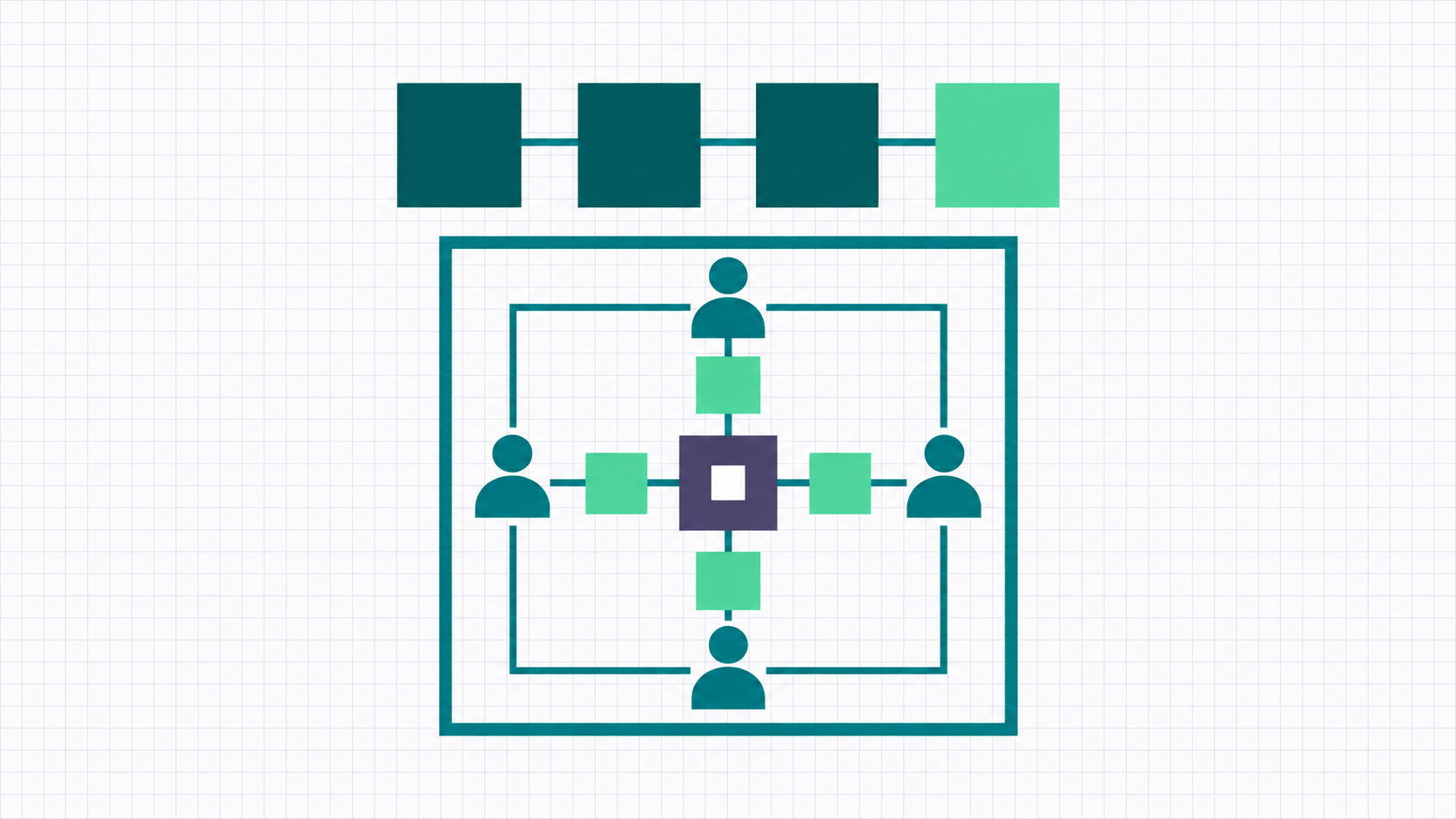
When you invest in AI, you are making a decision about what your company should be capable of doing. You may want to grow without adding cost at the same rate, bring more of your team's expertise to customers, or pursue an opportunity the business has never had the capacity to serve. Choosing between automation and AI agents should follow that ambition.
The distinction matters because these systems give the business different kinds of capability. Automation lets you carry out a defined process more consistently. An agent has room to choose how it pursues a result, which means you are also deciding how much discretion to delegate.
Automation follows predefined rules and paths. An AI agent can choose its next step based on what it finds, within the access and authority it has been given. Both can use AI, and a business may use them together. The investment question is whether that freedom to choose produces enough value to justify its cost and the responsibility that comes with it.
What changes when you move from automation to agents?
Automation is a strong choice when the company knows how the work should happen. It can support a sophisticated business with many decisions built into the process, including clear routes for exceptions. Its value comes from making that process dependable and economical to repeat.
An agent becomes worth considering when the route to the result cannot be fully prescribed in advance. It can examine new information and decide which permitted action to take next. That flexibility may allow the company to take on work that would otherwise require more direct attention from its people.
Anthropic's explanation of workflows and agents draws this distinction between predefined paths and model-directed processes. Its guidance is to start with the simplest approach that meets the need, since additional flexibility can introduce cost and delay.
For leadership, this means automation can be a substantial investment in the company's capacity. An agent needs a reason for its additional discretion. The ability to complete more steps independently has commercial value only when it helps the business achieve something that matters.
Greater autonomy needs a business case
A company can be ambitious about AI and disciplined about where it gives a system independence. Those positions belong together, particularly when an investment will influence how the business serves customers or earns revenue.
The leadership team should be able to explain what improves if the system has discretion. Perhaps the company can respond to a wider range of customer needs, or make specialized knowledge useful across more of the business. The case for an agent rests on whether choosing its own next step materially contributes to that improvement.
There is also a difference between the authority to investigate and the authority to commit the company. A system may be allowed to pursue an answer without being allowed to change a commercial commitment. Leadership needs to make that distinction deliberately, with the people accountable for the result helping to define the boundaries.
The AWS executive guide to agents and automation connects the choice to return on investment, organizational readiness and the degree of oversight required. Those considerations belong in the buying decision, alongside what the technology can do.
Capacity creates value when the business can use it
Time saved is a useful measure, but the business case should explain what the company intends to do with that capacity. An investment may allow experienced people to serve more customers, improve the economics of an existing offer, or give leadership room to test a new one. Each requires evidence beyond a faster demonstration.
If the ambition is growth, assess whether the company can deliver more of what customers value at an acceptable cost. If the ambition is better decisions, assess whether people can use the result with confidence. Review and correction remain part of the investment, even when they happen outside the software.
Research offers a useful caution against treating independence as a proxy for value. In Generative AI at Work, researchers studied an AI assistant used by 5,172 customer support agents and found a 15% average increase in issues resolved per hour, with substantial differences across workers. The study measured AI assisting people, rather than an autonomous system running the function. It supports a narrower, commercially relevant point: meaningful gains can come from helping people do their work better.
For an owner deciding where to commit capital, a dependable improvement with a clear use can be more valuable than broader autonomy with an uncertain return.
Your company's experience should shape the capability
An established business brings years of experience to an AI investment. Its people understand the customers and recognize the distinctions that affect a commercial decision. That knowledge should help determine what the system is expected to accomplish and what a good result looks like.
Buying software does not transfer responsibility for those choices to the vendor. Leadership still needs to decide which capability matters enough to build and who will own its performance once it becomes part of the business.
In an HVL engineering learning session, Praise Daramola raised a point with a direct implication for investment: each specialist agent introduces behavior someone needs to maintain and test. Adding agents therefore creates an ongoing commitment as well as an initial build. That commitment belongs in the business case from the beginning.
Our article on giving AI a better starting point looks at how a team's experience can improve the direction AI receives. Here, the leadership decision goes further: how much discretion should that capability have, and what evidence would justify expanding it?
Decide what deserves to grow
The first investment should give leadership a sound basis for the next one. A defined automation may meet the need and earn wider use across the company. An agent may demonstrate that its flexibility produces a result worth extending, with clearer evidence about the cost of owning it.
A successful internal implementation can also give a company a reason to investigate a broader commercial opportunity. That is a separate decision. The ability to use AI effectively inside your business does not establish that another company will pay for the same capability. Customer demand and the economics of delivery still need to be tested before committing to a new venture.
Our view is that the business should set the ambition and the evidence should determine how far to delegate. Leaders who understand the difference between automation and agents can make a more deliberate investment in what their company needs to become.
Start with the capability your business needs
At HVL, Blueprint helps business leaders decide where AI is worth the investment and co-build useful capability with their teams. Bring a part of the business you want to strengthen or an opportunity you want the capacity to pursue. We can discuss what would need to change, where AI could contribute and whether Blueprint is the right fit.